Wine Taste like a Pro
Lesson Objectives:
Learn the right way to hold a wine glass. Know what to look for in the glass. Be a confident wine drinker in social setting.
Proper Way to Hold a Wine Glass
It is important to hold the wine glass by the stem. When holding the glass by the bowl, we will warm the glass up with our body temperature. As we want to serve each glass at its optimal temperature, the unintentional warming is undesirable.Wine Tasting in 3 Steps
Professional wine tasting can be decomposed to 3 easy steps: Observe, Smell, and Taste.
1. Appearance
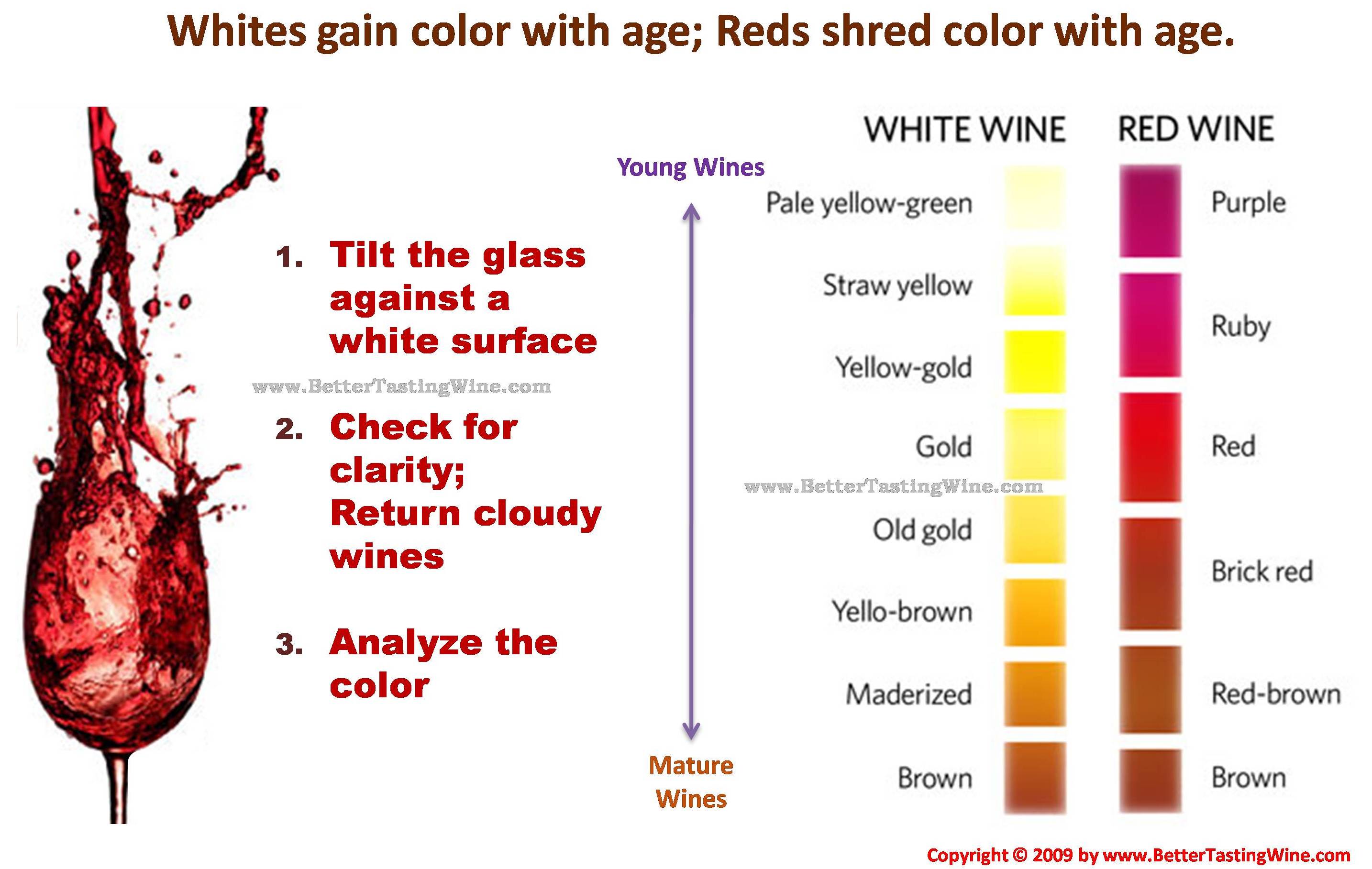
How: Tilt the glass so you can take a good look at the color of the core as well as the color of the rim. Do this against a white background to get an objective view.
What to look for:
Clarity -- Is the wine clear? Haziness or cloudyness can indicate an undesired fermentation occuring in the bottle, so a faulty wine.
Color -- Is it lemon-green, lemon, or gold? Is it purple, ruby, garnet or brown? A young red wine should be purple or ruby in color. A young white wine will have hints of green on its rim.
If a dry wine is brown in color. Be cautious when tasting. It is either very old or may be oxidized (which you will want to return if you are in a restaurant).
Can you see legs or tears running down the side of the glass? Despite common beliefs, legs are not an indicator of quality. It is a phenomenon caused by the alcohol evaporating at a faster rate and having a lower surface tension than water. The legs get pushed up the glass by the increased surface tension before being pulled down by gravity.
Are there sediments, dark residuals in the glass? Sediments are very common in a developing or mature bottle. As red wine ages, it shreds color in the form of pigmented sediments. While it is safe for consumptions, most sommeliers and wine lovers prefer decanting the wine to filter the sediments.
If it is a sparkling or Champagne, observe the bubbles in the glass? Are these tiny beads or large bubbles? Is it a consistent pertillence? A good quality sparkling tends to have tiny beads (dot-like) and a consistent pertillence.
2. Aroma
 How: Give the glass a swirl (you want to do this in a circular motion and stick to one direction to avoid jotting the wine too roughly). Swirling the glass increases interaction of wine with oxygen, which will release aromatic molecules and enrich the tasting experience.
What to look for:
Cleanliness -- Take a quick sniff. Determine if the bottle is good.
Does it smell fruity and fresh? If yes, signs of a good wine.
Are there notes of paper cartons which could indicate a corked (bad) wine?
Is there any sign of a sherry aroma which could indicate an oxidated (bad) wine?
If the wine is clean (not faulty), take a generous sniff to get a good sense of its aroma character.
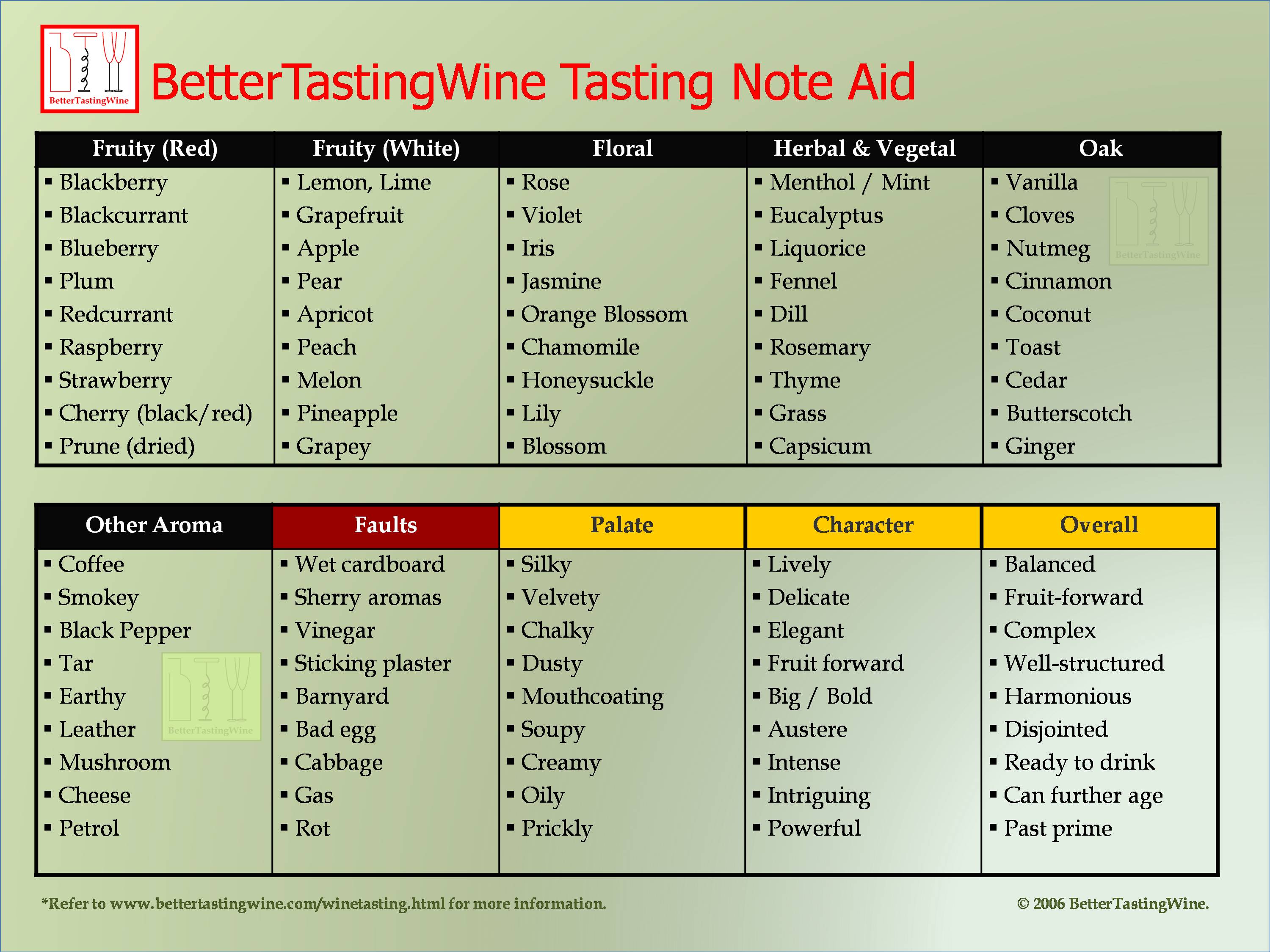
Common aroma categories are fruit, floral, herbal, vegetal, and oak. Examples of specific impressions are blackberry for fruits, rose for floral, cedar and nutmeg for oak influence.
Begin familiarize yourself with the broader aroma categories and eventually work towards specific impressions. Eventually work down to specific impression, with the help of our Wine Aroma Table.
3. Palate
How: Take a generous sip and swirl the wine around your tongue. It is important to swirl as our sensors for bitterness, sourness, saltiness, and sweetness are located at different areas of our tongue. Only via swirling the wine in our mouth can we fully pick up its different flavor profile.
Professional wine tasters would purse their lips and suck in air and let the wine opens up a bit in their mouth. The drawing in of the air allows the aroma to hit the olfactory receptor which is located at the back of the nose, enhancing the tasting experience.
What to look for:
Body: What is the weight of the wine on your palate? Is it light-bodied, medium-bodied, or full-bodied.
I often ask students to compare with milk. Light-bodied is like skim-milk, watery and light-weighted. Medium-bodied is like full milk. Full-bodied is like cream, rich and comes with a solid feeling of weight.
Sweetness: The word "Dry" is commonly misused. Dry in the wine world does not mean bitter, it simply means not sweet. Most red wines are dry.
Alcohol: How much heat can you feel the heat at the back of your throat? Wines made in a warm climate generally have a higher alcohol than wines made in a cool climate.
Tannin: Is there a puckering feeling in your mouth? Is your mouth drying up? Are your lips stuck to your gum? These are the feelings of a highly tannic wine.
Tannins come from grape skins, stalks, pips, as well as exposure to oak. It gives structure to a red wine. It also serves as the natural preservative in wines, helping them age. Grape varietals have different level of tannins. Pinot Noir, for example, is less tannic than Cabernet Sauvignon.
Most young white wines have minimal contact with grape skins/ stalks, they do not have much tannins. Big whites that have undergone maturation in new oak (e.g. a White Burgundy Grand Cru) would have some tannins.
Acidity: Can you feel your mouth watering? Good acidity gives wine a good backbone as well as feelings of crispiness and freshness.
Flavor: What flavors can you taste? Is it straight-forward or can you pick up layers of flavors?
Length & Finish: How long does the wine linger in your mouth after you swallowed (or spit) it? Count in seconds. A good wine will last 10 seconds; A great wine can last 30+ seconds! A wine's finish describes the character of the length. Is it clean, is it bitter, or is it menthol?
Proceed to Lesson 2: Basic Grapes
Stay informed. Follow us and subscribe here to get our latest wine insider news and tips:
Practical Wine Lessons: Wine Tasting Like a Pro | Grapes | Serving Wine | Food Pairing | Preservation | Temperature | Restaurant Ordering | Wine Labels | Wine Regions | Wine Storage | Start a Collection | Common Wine Myths.
Useful Wine Tips: Ten Facts to Become an Instant Wine Pro | Vintage Guide | Removing a Broken Cork | Serving Order of Wines | Fastest Way to Chill a Wine | Host Wine Party | Elements of a Good Wine | Wine Investment "Winning" Guide | Leftover Wine: Recipe for Vino Punch | Freeze Your Leftover Wine | Wine Moods Pairing | Best Way to Preserve Champagne After Open | Ten Must-Have Wine Accessories.
Tasting Tutorial: Cabernet vs. Merlot vs. Pinot Noir | Sauvignon Blanc vs. Chardonnay vs. Riesling | Burgundy vs US vs New Zealand Pinot Noir.
Fun Download: Wine Tasting Scorecard | Wine Serving Temperature Chart | Wine Aroma Table | 3 Must-Know Red Grapes | 3 Must-Know White Grapes | Vintage Chart | Wine Party Themes | Wine Region Maps | Grand Cru Chart | Wine and Moods Pairing Chart | Wine Quotes & Wine Humor.
Travel & Exploration: Champagne 101 | Bandol | Italy | Spain | Sherry.
Jewels & Gems: Grower Champagne Pierre Gimonnet | Gravner Ribolla - An Amber Wine Maturated in Clay | Gaja - King of Barbaresco.